
Employability and careers Guidance
Apprenticeships and T-Levels
Apprenticeships
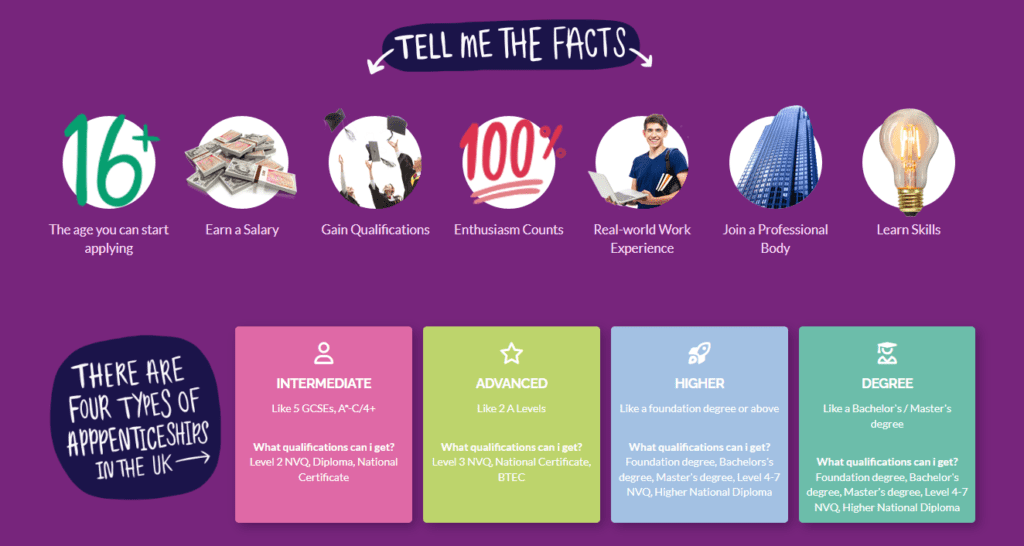
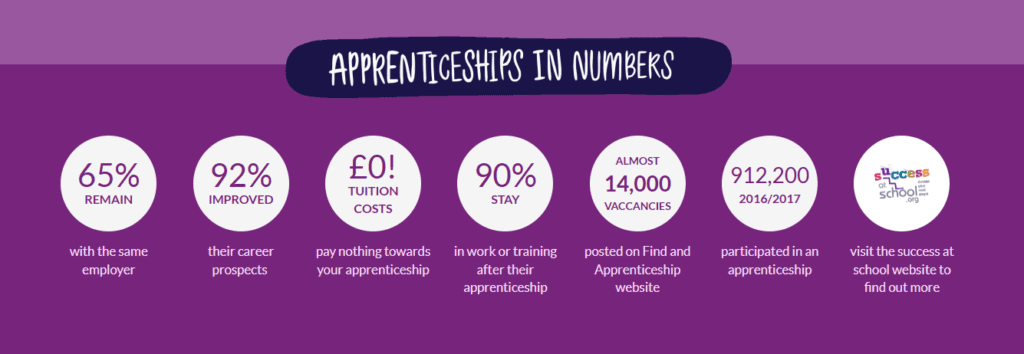
Apprenticeships combine real work with training and study. Being an apprentice isn’t the same as being a college or university student. You won’t just study and gain new knowledge as an apprentice, you’ll be putting what you learn straight into practice. Apprentices don’t have to pay tuition fees either.
What is an Apprenticeship?
As an apprentice you’ll:
- train for the workplace
- get hands-on experience
- earn a salary and get the same rights as employees, including sick leave and holiday pay
- spend at least 20% of your working hours training or studying
- undertake ongoing assessments, including an end-point assessment
It can take between one and six years to complete an apprenticeship, depending on:
- the apprenticeship you choose
- your apprenticeship level
- your previous experience
If an apprentice needs to take a break from their learning, it could take them longer to complete their apprenticeship
Who can be an apprentice?
You can apply for an apprenticeship if you’re:
- 16 or older
- not in full-time education
- live in England
What are the different apprenticeship levels?
There are two apprenticeship levels open to you:
Level 2
These apprenticeships provide basic knowledge and skills for specific jobs and are equal to GCSEs.
Level 3
These apprenticeships offer more specialised knowledge and skills and are equal to A levels
What are T Levels?
T Levels are a new qualification designed to give you a head start towards the future you want. They follow on from your GCSEs and are equivalent to 3 A Levels. A T level is a 2-year qualification that brings classroom and industry placement together, on a course designed in collaboration with the best employers. You’ll spend 80% of your time in a College and 20% on an industry placement for a minimum of 315 hours (approximately 45 days) to equip you with the knowledge and skills companies are looking for.
Your T Level will help you to step straight into your chosen career, an Apprenticeship or a Degree. Wherever your future is heading, take it to the next level.
Are T Levels right for you?
This next level qualification is right for you if you:
- Have just finished your GCSEs want to get into a skilled job like a mixture of classroom and practical learning
- Want the knowledge, skills and experience to get the job you want
- Are interested in spending time with employers to try out different job roles
What is the difference between T Levels and Apprenticeships?
T Levels and Apprenticeships are very similar, they will be based upon the same standards which are designed by employers. However, an Apprentice spends most of their time in the workplace, learning on-the-job, whereas a T Level student will spend most of their time in the classroom/workshop.
Where can T Levels take me?
On successful completion of a T Level qualification, you will have a range of progression routes including: gaining employment in a skilled occupation, apply for a Higher or Degree Level Apprenticeship, or continue a Higher Level Degree at University